






By Karen Forero, founder and formulator of Gachala Skincare, London, Ontario.
Every week someone writes to me with the same question: "I want the results of retinol, but my skin can't handle it. Is there a natural retinol alternative that actually works?" It's a fair question, and the honest answer is more nuanced than most beauty marketing lets on. Here is how I explain it to my own customers.
Why people look for a retinol alternative in the first place
Retinol (a vitamin A derivative) is one of the most studied ingredients in skincare. It speeds up skin-cell turnover and supports collagen, which is why it's the gold standard for fine lines and uneven texture. The trade-off is well known: dryness, flaking, redness and sun sensitivity, especially in the first weeks. It is also generally avoided during pregnancy and breastfeeding, and it's a hard sell for anyone with rosacea, eczema-prone or very reactive skin.
In Canada, where indoor heating turns our skin into parchment from November to April, that irritation is amplified. So the question isn't really "retinol or nothing." It's "what gets me the glow and firmness without the peeling phase?"
The three plant ingredients most often called "natural retinol"
1. Bakuchiol
Extracted from the seeds of the babchi plant (Psoralea corylifolia), bakuchiol is the best-known retinol alternative and the one you'll see at Sephora. It is not chemically related to vitamin A, but in published comparisons it produced similar improvements in the look of wrinkles and pigmentation with less stinging and scaling. It's a good, gentle option. Its limitation is that it does very little for the skin barrier itself, so you still need a nourishing oil or cream alongside it.
2. Rosehip and buriti (natural beta-carotene)
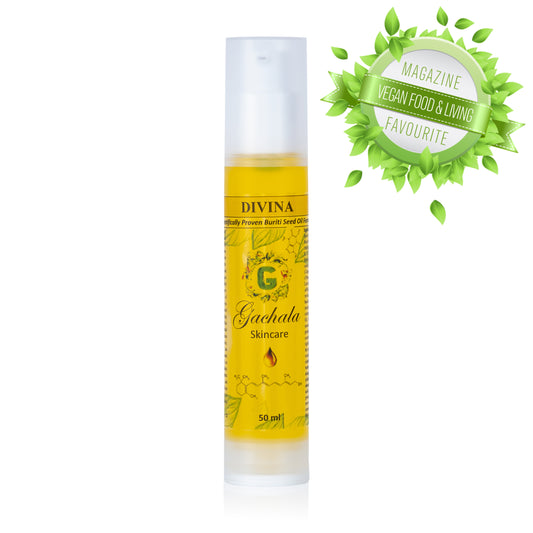
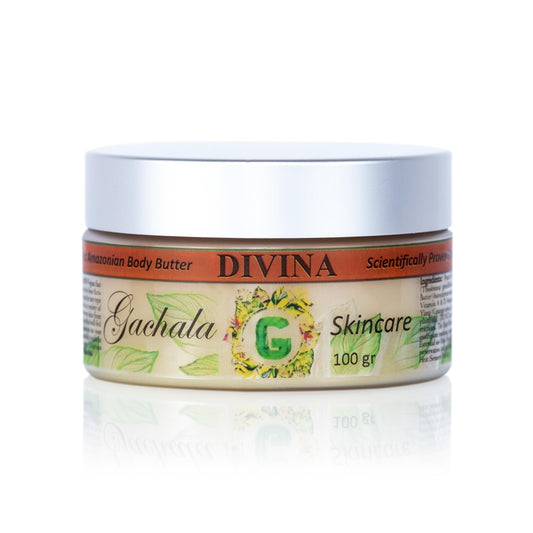
These oils contain carotenoids, precursors the skin can convert to vitamin A in tiny amounts. They won't match a prescription retinoid, but they give a gradual brightening effect and are wonderfully nourishing. Buriti seed oil, from the Amazon, is the richest natural source of beta-carotene we know of, which is why it's the core of our Divina Body Serum for the neck and décolletage.
3. Sacha inchi (the Amazonian omega powerhouse)
This is the ingredient I built Gachala around. Sacha inchi (Plukenetia volubilis) seed oil has one of the highest omega-3 concentrations of any plant oil, alongside omega-6 and omega-9. Where retinol works by forcing turnover, sacha inchi works by rebuilding the lipid barrier so skin holds water, looks plumper and calms down. When the barrier is healthy, texture and fine lines soften on their own. It also happens to be non-comedogenic and calming for breakout-prone skin.
So which one is right for you?
| Your skin | Start with | Why |
|---|---|---|
| Resilient, no sensitivity, wants maximum speed | Retinol (low %), nights only | Nothing is faster. Buffer it with a barrier oil. |
| Sensitive, rosacea-prone, or pregnant | Bakuchiol or a barrier-first oil serum | Results without the retinization phase. |
| Dry, mature, "nothing absorbs" skin | Sacha inchi + buriti oils, plus a rich night cream | Barrier repair is the bottleneck; fix that first. |
| Combination or breakout-prone but ageing | Sacha inchi oil serum (yes, oil) | Linoleic-acid-rich oils help balance sebum. |
How I formulated our retinol alternative
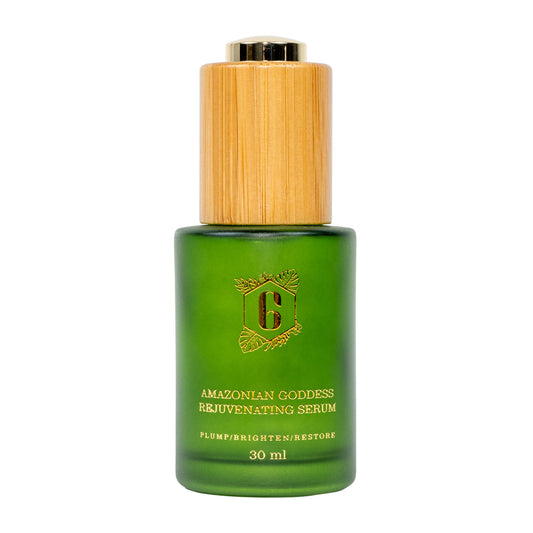
Our Amazonian Goddess Rejuvenating Serum combines cold-pressed sacha inchi with açaí, bisabolol and a calendula liposome complex. The liposomes carry the actives deeper; the açaí and bisabolol calm redness; the omegas rebuild the barrier. It's 97% organic, vegan and made by hand here in London, Ontario, in small batches.
It is not retinol and I never pretend otherwise. What customers report is skin that looks calmer within days and smoother and brighter over four to six weeks, without a single flake.
A simple Canadian-winter routine that works with any of these
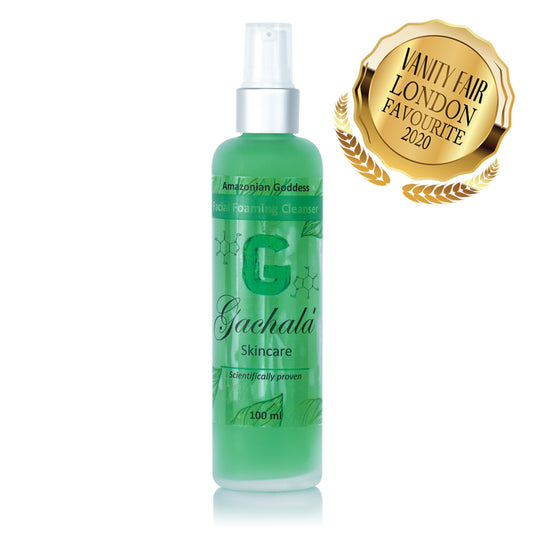
- Cleanse gently. Skip foaming sulphates. Our Facial Foaming Cleanser is soap-free and fragrance-free for a reason.
- Mist. Damp skin absorbs oils far better. Any of our Mistico facial mists works.
- Treat. 2–3 drops of the Goddess Serum pressed in, morning and night. If you also use retinol, alternate nights.
- Seal. At night, a rich cream over the top. Luna Night Cream pairs with the serum; together they're our best-selling duo.
- Exfoliate once or twice a week, never daily. Our Enzyme Resurfacing Powder uses fruit enzymes rather than scrubbing grains.
A few honest caveats
- No topical product, natural or synthetic, replaces sunscreen. Wear it, even in a Canadian January.
- Patch-test anything new behind the ear for 48 hours.
- If you're pregnant or managing a skin condition, check with your dermatologist or midwife before adding actives.
Have a question about your skin? Reply to any of our emails or use the contact page and I'll answer personally. And if you'd like to try the serum, code WELCOMEBACK15 takes 15% off through October 31, with free shipping across Canada on orders over $100.
